
Ketamine-Assisted Psychotherapy (KAP) in Indianapolis
For people who have tried everything and are ready for a different kind of door to open.

What Is Ketamine-Assisted Psychotherapy And Is It Right for You?
We'll be honest about how we describe KAP to our clients. It's a last resort. Not because it's dangerous or experimental, because it's neither, but because it's meant for people who have already genuinely done the work. They've tried therapy. They've tried antidepressants. They've made real efforts to heal, and something is still standing in the way.
For those clients, Ketamine-Assisted Psychotherapy can be the thing that finally creates an opening.
The simplest way to explain it is this. Ketamine temporarily makes the brain more pliable. It quiets the rigid, defensive loops that keep replaying the same painful thoughts, and it opens a window where the brain is more easily capable of forming new, healthier connections.
In three years of doing this work, we've watched clients who had run out of hope find real movement and change!
But here's what matters most: the medicine alone is not the therapy. The medicine opens the door. The work we do together in the therapy room is how you walk through it, and how you make sure it stays open.

The Difference Between a Ketamine Clinic and a Therapeutic Practice
You can order ketamine treatment online now, with no therapist involved at all. The medicine may still create that window of neuroplasticity. But a more pliable brain only matters if you're replacing the old, unhelpful connections with new, healthy ones. Without the integration therapy piece, that window opens and closes without anything lasting being built inside it.
That's the core difference between what we offer at CCA Therapy and a standalone infusion clinic.
At a ketamine clinic, you receive the medicine and go home. Here, the medicine session is one part of a carefully designed, three-phase process. We bring over a decade of trauma-specialized therapy and three years of dedicated KAP experience to every step of your treatment.
We partner with the medical team at Integrative MLA, Dr. Amich and Dr. Pabla, who handle the medicine administration side with real expertise and care. What we bring is the preparation, the integration, and the ongoing therapeutic relationship that turns a profound experience into lasting change.

Our Collaborative Model With Integrative MLA
Safe, effective KAP requires two things working in tandem: excellent medical care and excellent therapeutic support. We built our co-care model with the team at Integrative MLA because we believe you deserve both, not one or the other.
Here's how the partnership works. We handle your complete mental health assessment, your preparation sessions, and all of your integration therapy. The doctors at Integrative MLA handle the physical evaluation, the medication prescription, and the supervised medicine sessions. At every step, your therapist and your medical provider stay in communication, so nothing falls through the cracks and your treatment plan reflects the full picture of who you are.
This isn't a referral and a handoff. It's a genuine team approach, and we believe it's a big part of why our clients do as well as they do.

-
Everything begins with a comprehensive Mental Health Assessment here at CCA Therapy. We'll take a thorough look at your history with trauma, depression, anxiety, and any previous treatment, to determine whether KAP is the right tool for where you are right now.
If we believe KAP is a strong fit, we'll send our assessment to Integrative MLA, who will then schedule their own physical evaluation with you. Once both teams have cleared you as a safe and appropriate candidate, we begin Preparation Sessions together before your first medicine appointment.
Preparation isn't just going over logistics. We're doing real work. We'll clarify your intentions, meaning what you most want to move through or toward. We'll develop affirmations that you'll bring with you into your medicine sessions. And we'll build your toolkit of breathwork and self-regulation techniques, so that if you feel overwhelmed or anxious during the experience, you have something solid to reach for. By the time you walk into Integrative MLA for your first session, you'll be ready.
-
The medicine sessions take place under medical supervision at Integrative MLA. During this time, ketamine quiets the brain's Default Mode Network, the part responsible for those stuck, looping negative thoughts, and creates the window of neuroplasticity we've been preparing for.
One thing clients often tell us afterward: it's gentler than they expected. Many experience visual changes, but they don't describe them as frightening. They describe them as beautiful, even fascinating. They go on what feel like internal journeys, and they come out of it in awe, ready to process what they saw and felt.
-
Whenever possible, we see clients within 24 hours of their medicine session, while the neuroplastic window is still wide open. This timing is intentional. The 48 to 72 hours following a KAP session are when the brain is most flexible, most capable of forming new connections, and most responsive to therapeutic work.
This is where the real transformation happens. Together, we make meaning of what surfaced during your experience. We use Brainspotting and somatic techniques to anchor the insights into your nervous system, not just your intellect. We turn the moments of insight into actual new patterns, new habits, and new ways of relating to yourself and the people around you.
How the KAP Process Works at CCA Therapy
If you're considering KAP, I want you to know exactly what to expect — no surprises, no pressure. Here’s how we do it together:

FAQs
-
KAP is for people who have genuinely tried to get better and something is still in the way. Our KAP clients typically fall into one of a few categories. People who have been on antidepressants without meaningful relief. People with treatment-resistant depression or PTSD who feel stuck despite years of therapy. Clients we're already working with, where we both sense that something deeper needs to shift. In some cases, clients come to us as a referral from Integrative MLA, having already decided to pursue ketamine treatment and needing a therapist who specializes in preparation and integration.
If you've tried the standard routes and you're still not where you want to be, KAP may be worth exploring.
-
We'll be straightforward here. Yes, you can technically access ketamine treatment without a therapist. There are online services that make this possible. But in our clinical experience, the therapy is where the lasting change actually happens. A more flexible brain is a tremendous opportunity. Without intentional, trauma-informed work to fill that space with something new, the window opens and closes without much to show for it. The preparation and integration sessions aren't a formality. They're the whole point.
-
KAP is generally not appropriate for people with active psychosis or a history of schizophrenia, uncontrolled high blood pressure or certain heart conditions, active substance use disorder involving ketamine or similar substances, or those who are pregnant or breastfeeding. The assessment process, both with us and with Integrative MLA, is specifically designed to identify any contraindications before treatment begins.
-
Most clients are surprised by how gentle it is. Many experience visual changes or what feels like an internal journey, with colors, imagery, and a sense of moving through something meaningful. Clients have described it to us as beautiful, even fascinating. It is not typically frightening or disorienting. You are in a medically supervised setting with the Integrative MLA team the entire time, and by the time you arrive for your first session, we will have spent time in preparation making sure you feel grounded and ready.
-
It starts with a free 15-minute consultation, just a conversation to see if KAP feels like a good fit for where you are right now. If it does, we'll schedule your full Mental Health Assessment as the first official step. You can book the consultation directly through the link below, or reach out by phone or email if that's easier.
-
KAP is a private pay service and is not typically covered by insurance. Costs include both the therapy sessions at CCA Therapy and the medical fees at Integrative MLA. Please visit our Billing page or reach out directly for current rates. We're happy to walk you through what the full process looks like financially, so there are no surprises.
Meet the Doctors at Integrative MLA
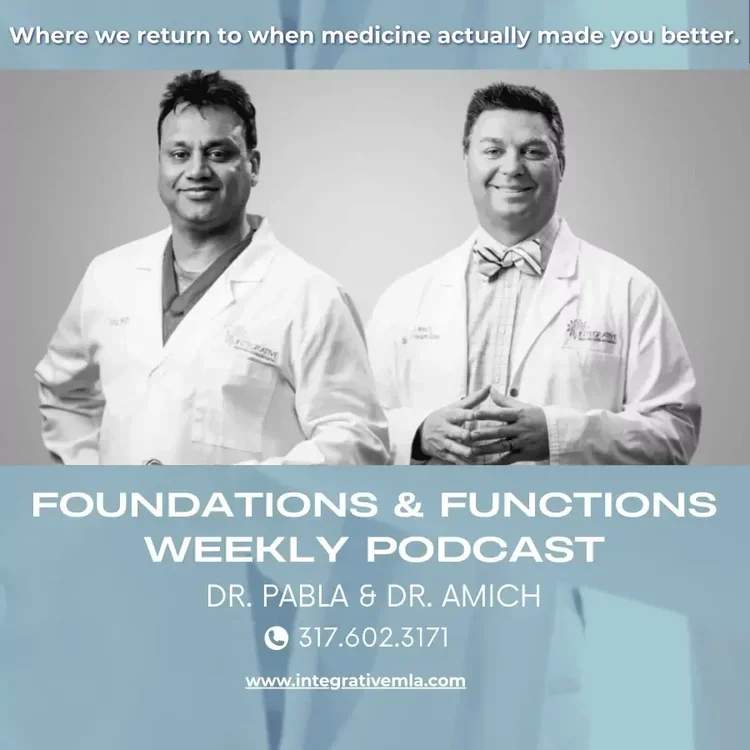
The medication side of your KAP treatment is in the hands of Dr. Amich and Dr. Pabla at Integrative MLA — experienced medical professionals who are deeply committed to safe, evidence-based ketamine treatment in Indianapolis.
Want to hear them explain KAP in their own words? They recently recorded a podcast episode on their Foundations and Functions show covering exactly what ketamine is, how it works in the body, and what one of their patients experienced firsthand.
You've done enough white-knuckling. Let's find a different way.
If you've spent years managing your symptoms, trying new medications, doing the therapy homework, and you still feel like you're running in place, KAP might be for you. Some wounds need a different kind of key.
In three years of KAP work at CCA Therapy, we've watched people who had genuinely given up hope on feeling better experience meaningful shifts that other approaches had not produced. It is one of the most effective tools we have for people who feel stuck.
If you're in Indianapolis, or anywhere in Indiana, Ohio, or Florida, and you're ready to find out whether KAP might be that key for you, we'd love to have that conversation.
Insurance & Fees CCA Therapy is a private pay practice. Superbills are available for potential out-of-network reimbursement. Visit our Billing page for full fee information and a Good Faith Estimate.
What We Can Help You With
Click any service to learn more about our approach.

Trauma & PTSD
For adults still carrying past experiences in their body, relationships, and nervous system.
Learn more ›
Brainspotting
A neurobiological approach that reaches where trauma is stored in the brain and body.
Learn more ›
Anxiety
For high-achievers who look fine on the outside and cannot slow down on the inside.
Learn more ›
Depression
Including treatment-resistant depression, postpartum depression, and depression rooted in trauma or grief.
Learn more ›
Grief & Loss
For every kind of loss, including grief in recovery, identity grief, and losses that go unrecognized.
Learn more ›
Addiction & Substance Use
Harm reduction-based, judgment-free support for the full spectrum of addictive patterns.
Learn more ›
Ketamine-Assisted Psychotherapy
For clients who have tried everything and are ready for a different kind of door to open.
Learn more ›
Myofascial Release & Somatic Bodywork
Hands-on nervous system support through Barnes MFR and somatic bodywork. Offered by Chelsey Gilbert, LMT.
Learn more ›